
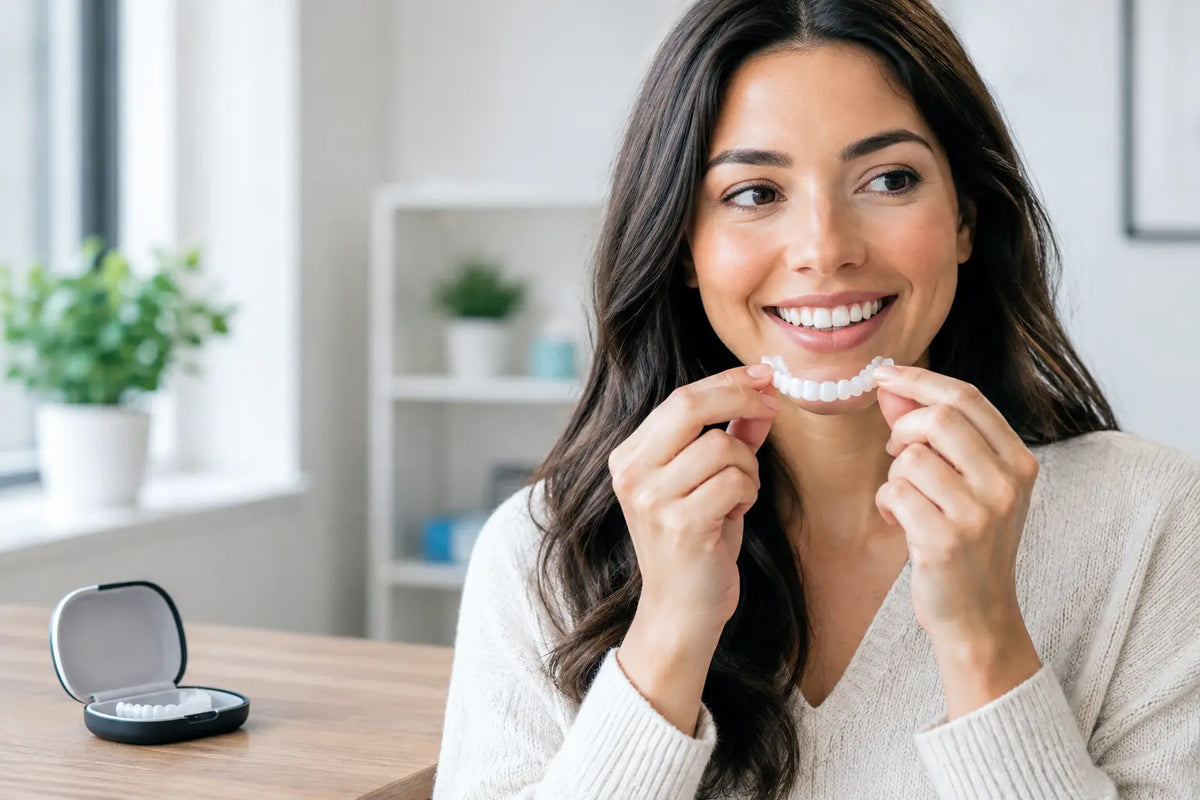
A new smile should help you feel more ready to speak up, not make you worry about every word. So, do removable veneers affect speech? They can temporarily change the way certain sounds feel, especially during your first few wears. For most people, that adjustment is short-lived when the veneers are truly custom made, fit securely, and are worn as directed.
Removable veneers sit over the visible surfaces of your teeth. Because your tongue, lips, and airflow are used to the shape of your natural teeth, your mouth may need a little time to adapt to the added material. That does not mean your speech will stay different. It means your mouth is learning a new shape.
Do Removable Veneers Affect Speech at First?
It is common to notice a slight difference in pronunciation when you first wear removable veneers. Some people become more aware of sounds made with the tongue near the front teeth, such as “s,” “z,” “sh,” “ch,” “t,” and “th.” You might feel a minor lisp, speak a little more carefully, or notice that your mouth produces more saliva while it adjusts.
These early changes are usually about awareness as much as function. When you pay close attention to your voice, even a small change can feel larger than it sounds to other people. With practice, your tongue and lips generally find their normal movement patterns again.
The adjustment period varies. A person wearing a top appliance only may have a different experience than someone wearing both upper and lower veneers. The amount of tooth shape being covered, the thickness of the appliance, your natural bite, and how consistently you wear it can also play a role.
Why Fit Makes Such a Difference
Not all removable veneers are made the same way. A loose, bulky, or poorly contoured appliance is more likely to interfere with clear speech because it can shift when you talk or take up unnecessary space behind the lips. It may also make you tense your mouth in an effort to hold it in place.
A custom-made appliance is designed from your impressions, which helps it follow the unique shape of your teeth and gums. The goal is a stable fit that feels natural enough for normal smiling, talking, and everyday social moments. Custom design does not mean there is never an adjustment period, but it can make that period more comfortable and predictable.
That is one reason an at-home impression process deserves care. Clear, accurate impressions give the production team a better foundation for creating an appliance that fits your smile instead of relying on a generic shape. At Removable Veneers USA, customers also have access to a personal design consultant and licensed dental professional involvement for guidance throughout the process.
Which Sounds May Feel Different?
Speech is a coordinated movement between your tongue, teeth, lips, jaw, and breath. Removable veneers can subtly alter the surface your tongue touches and the amount of room it has to move. That is why crisp, front-of-mouth sounds may be the first ones you notice.
“S” and “z” sounds can feel slightly different because air passes close to the front teeth. “Th” may take a few repetitions because the tongue naturally moves toward the teeth for that sound. Words with repeated consonants, such as “statistics,” “thoughtful,” or “successful,” can be useful practice words if you want to get comfortable quickly.
A properly fitted appliance should not make it impossible to communicate. If talking remains difficult after you have given yourself time to adjust, or if the veneers move, pinch, or feel overly thick, do not ignore it. A fit concern is worth addressing rather than trying to force yourself to adapt around it.
How to Adjust to Speaking With Removable Veneers
The best approach is simple: give yourself a low-pressure practice period before a big event, presentation, date, interview, or photo day. Wear your veneers at home first, then talk normally while doing familiar tasks. Read a page from a book or article aloud, leave yourself a voice memo, or have a relaxed conversation with someone you trust.
Speaking at a normal pace is usually more helpful than trying to overcorrect. If you slow down excessively or hold your jaw rigid, speech can feel less natural. Let your mouth move, breathe normally, and repeat any sounds that feel unfamiliar. A few brief practice sessions are often more useful than one long, frustrating session.
You may also find that drinking water before speaking helps if your mouth feels dry. Early extra saliva can happen as your mouth recognizes a new appliance, and that usually settles as you become accustomed to wearing it. Avoid using adhesives or attempting to reshape the veneers yourself unless you have received specific guidance from the company that made them.
What Is Normal, and What Is Not?
A slight temporary lisp, increased awareness of your mouth, or a short learning curve can be normal. Speech should become easier as you gain familiarity with the appliance. Your removable veneers should feel secure enough that you are not constantly worried they will move while you speak.
Persistent pain, rubbing, sharp edges, major looseness, trouble closing your mouth comfortably, or speech that does not improve are not concerns to simply push through. Remove the appliance and contact customer support for next steps. A company that provides custom products should be prepared to review fit concerns and explain available adjustment or satisfaction protections.
It is also wise to keep expectations realistic. Removable veneers are cosmetic appliances, not permanent dental restorations. They are designed to improve the appearance of visible teeth without drilling, needles, or an in-office cosmetic procedure. Their comfort and speech performance depend on your individual anatomy, the quality of your impressions, the model you select, and how well the finished appliance fits.
Planning for a Confident First Wear
If you are ordering removable veneers for a wedding, reunion, work function, vacation, or other meaningful occasion, do not make the event your first time wearing them. Build in time to receive your appliance, try it on, practice talking, and contact support if you have questions about fit.
This preparation is not about expecting a problem. It is about giving yourself the best chance to enjoy the moment without focusing on your smile. Once the appliance feels familiar, many people find they stop thinking about individual words and start focusing on the conversation, the camera, or the people in front of them.
A smile transformation should not require you to hide your voice. With a well-made custom fit, a little practice, and honest attention to comfort, removable veneers can become a natural part of how you show up when you want to smile and speak with more confidence.