
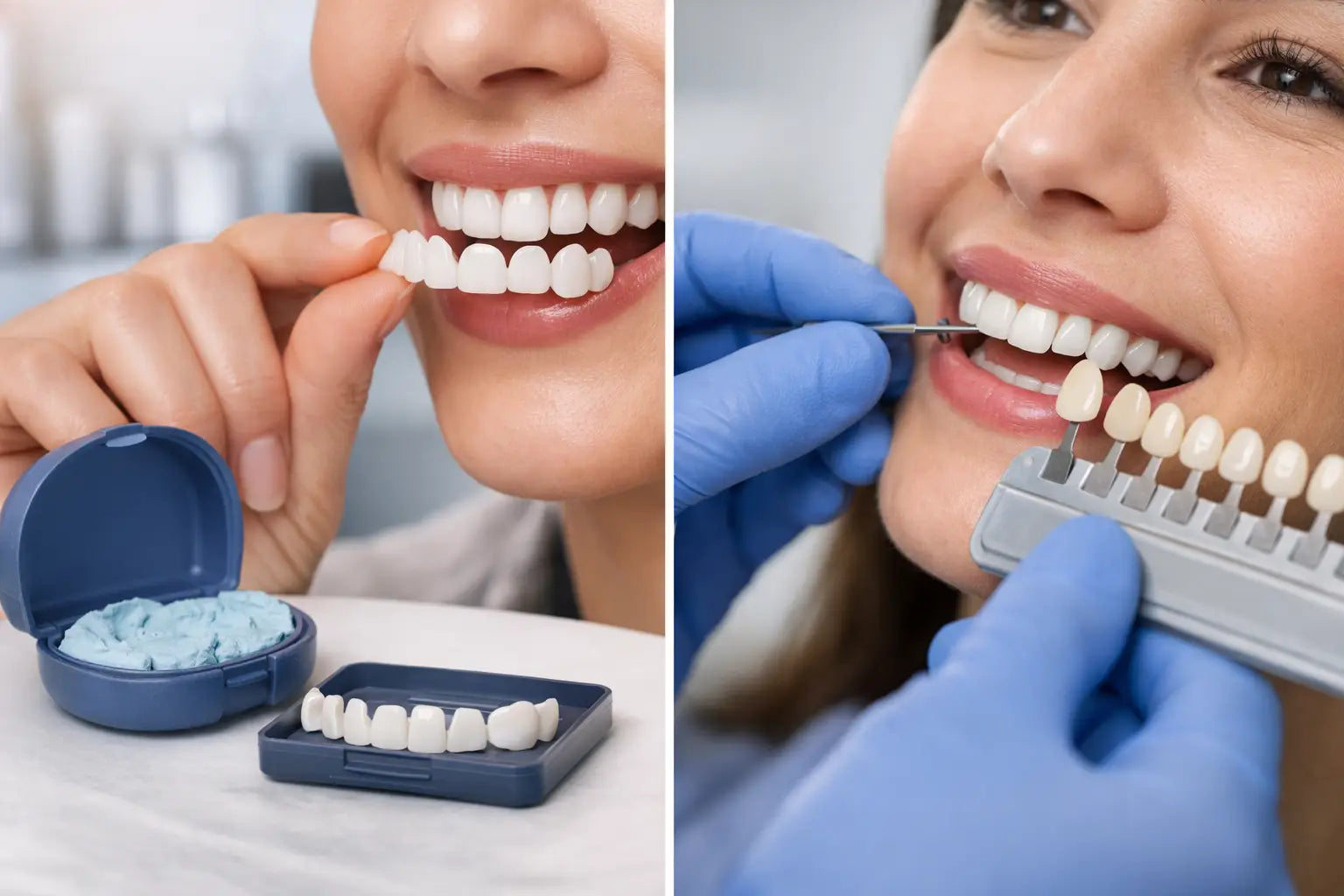
A chipped front tooth can change how you show up in photos, meetings, and everyday conversations. When comparing removable veneers versus bonding, the real question is not which option is universally better. It is which approach matches your smile goals, budget, timeline, and comfort level with permanent dental work.
Both options can improve the appearance of visible teeth, including discoloration, small gaps, uneven edges, worn-looking teeth, and certain chips. The experience of getting there is very different. Bonding is an in-office cosmetic procedure that changes the tooth with composite resin. Custom removable veneers are made-to-order cosmetic appliances that fit over the teeth and can be removed when you choose.
What Is Cosmetic Bonding?
Cosmetic bonding uses a tooth-colored composite resin that a dental professional shapes directly onto a tooth. It may be used to soften a chipped edge, close a small gap, build up a worn area, or change the appearance of a tooth that looks short or uneven.
The process generally happens in a dental office. The resin is color-matched, applied, sculpted, and hardened with a curing light. Depending on the concern being addressed, the tooth surface may need preparation for the material to adhere properly. That preparation can be minimal, but it is still a treatment performed on the natural tooth.
Bonding is often most practical when the goal is a focused correction on one or a few teeth. It can look natural when completed well, especially for small changes. However, it is not a removable or reversible cosmetic cover. If the resin becomes chipped, stained, or worn over time, it may need to be repaired or replaced by a dental professional.
What Are Custom Removable Veneers?
Custom removable veneers, sometimes called snap-on veneers, are made to cover the visible surfaces of your teeth and create a more consistent-looking smile. Rather than adding material permanently to individual teeth, a custom appliance fits over your existing teeth.
With Removable Veneers USA, the process starts at home with an impression kit. After impressions are submitted and approved, your appliance is made in a U.S. dental lab through a custom production process. A personal design consultant can help guide your order, including model and shade decisions, so you are not left trying to make cosmetic choices on your own.
Because the appliance is removable, it does not require drilling, needles, or permanent alteration to the teeth. That distinction matters for people who want to improve the look of multiple visible teeth but are not ready for an irreversible cosmetic procedure or a series of office appointments.
Removable Veneers Versus Bonding: The Biggest Differences
The clearest difference is permanence. Bonding attaches composite material directly to the tooth. Removable veneers sit over the teeth and are taken out when you are not wearing them. If preserving your natural teeth without altering them is a priority, removable veneers offer a non-invasive path.
Coverage is another major consideration. Bonding is usually designed around individual teeth and targeted concerns. It can be a strong choice for one noticeable chip or a narrow gap. A removable veneer appliance is designed to create a coordinated look across a top arch, bottom arch, or both. That can be appealing when several teeth are stained, uneven, pointed, gapped, worn, or visibly mismatched.
The timeline is different, too. Bonding requires scheduling an office visit and may require follow-up care later. Custom removable veneers still require a manufacturing period, but the impression process begins from home. For adults with busy schedules or who prefer privacy, that convenience can be meaningful.
Cost deserves an honest comparison. Bonding is priced per tooth in many offices, so the total can rise quickly when several front teeth need cosmetic improvement. Removable veneers are purchased as an appliance for the top, bottom, or both arches. The right value depends on how many teeth concern you, the model you choose, and whether you want a single-smile transformation rather than isolated touch-ups. Financing may also make a custom appliance more manageable for qualified buyers.
When Bonding May Be the Better Fit
Bonding can make sense when you have one or two teeth with a minor cosmetic concern and you want the result to remain in place at all times. Someone with a small edge chip on an otherwise even, bright smile may prefer a targeted in-office solution rather than covering an entire arch.
It may also fit people who are comfortable with ongoing professional maintenance and the possibility that bonded resin will eventually need attention. Composite material can be a practical cosmetic tool, but it is not maintenance-free. The exact longevity and appearance depend on the tooth, the bite, the materials used, and how the restoration is treated over time.
If you are considering bonding for a larger number of visible teeth, ask for a clear total estimate and discuss what future repairs or replacement may involve. A lower per-tooth price can look different once several teeth are included.
When Removable Veneers May Be the Better Fit
Custom removable veneers can be a compelling choice when your concern is the overall appearance of your smile, not just one tooth. They are especially worth considering if you want a more uniform look for social events, work, dating, photos, or simply feeling less guarded when you smile.
They can also suit adults who want to avoid drilling and permanent alteration. The ability to remove the appliance gives many people a greater sense of control. You can choose when to wear your smile transformation instead of committing your natural teeth to a permanent cosmetic change.
Fit and customization are essential. Generic, boil-and-bite products sold as quick fixes are not the same as an appliance created from your impressions. A custom process is designed around your individual teeth and smile line, which helps support a more secure, natural-looking result. Premium material options and stain-resistant upgrades can further affect the look and long-term experience of the appliance.
That said, removable veneers are not meant to solve every dental concern. They are a cosmetic appliance, not a substitute for diagnosis or treatment where there is pain, significant damage, or another issue requiring professional care. Realistic expectations are part of choosing confidently.
Questions to Ask Before You Decide
Start by identifying the scope of the change you want. Are you trying to improve one chipped tooth, or do you wish your entire visible smile looked brighter, straighter, and more even? A single-tooth concern may point toward bonding, while a broader cosmetic concern may make a top, bottom, or top-and-bottom removable veneer package more practical.
Next, consider your comfort with permanence. Some people appreciate that bonding stays in place. Others prefer a custom appliance that does not alter the teeth underneath. Neither preference is wrong, but it should be a deliberate choice rather than an afterthought.
Finally, think beyond the first appointment or first purchase. Compare the full cost of the result you want, the time required, future maintenance, and how much support you will have along the way. For an at-home custom veneer process, experienced human guidance matters. From impressions to final design details, support can make a major difference in how confident you feel about your order.
A Smile Choice Should Feel Like Your Choice
There is no need to accept a one-size-fits-all answer to a personal cosmetic concern. Bonding offers a permanent, tooth-by-tooth approach for select changes. Custom removable veneers offer a non-invasive, whole-smile option for people who want visible improvement without committing to drilling or conventional cosmetic dentistry.
If your smile has been holding you back, choose the option that gives you the balance of appearance, convenience, and control you want. A carefully made custom removable veneer can be more than a cosmetic cover - it can be a comfortable way to feel ready to smile again.