
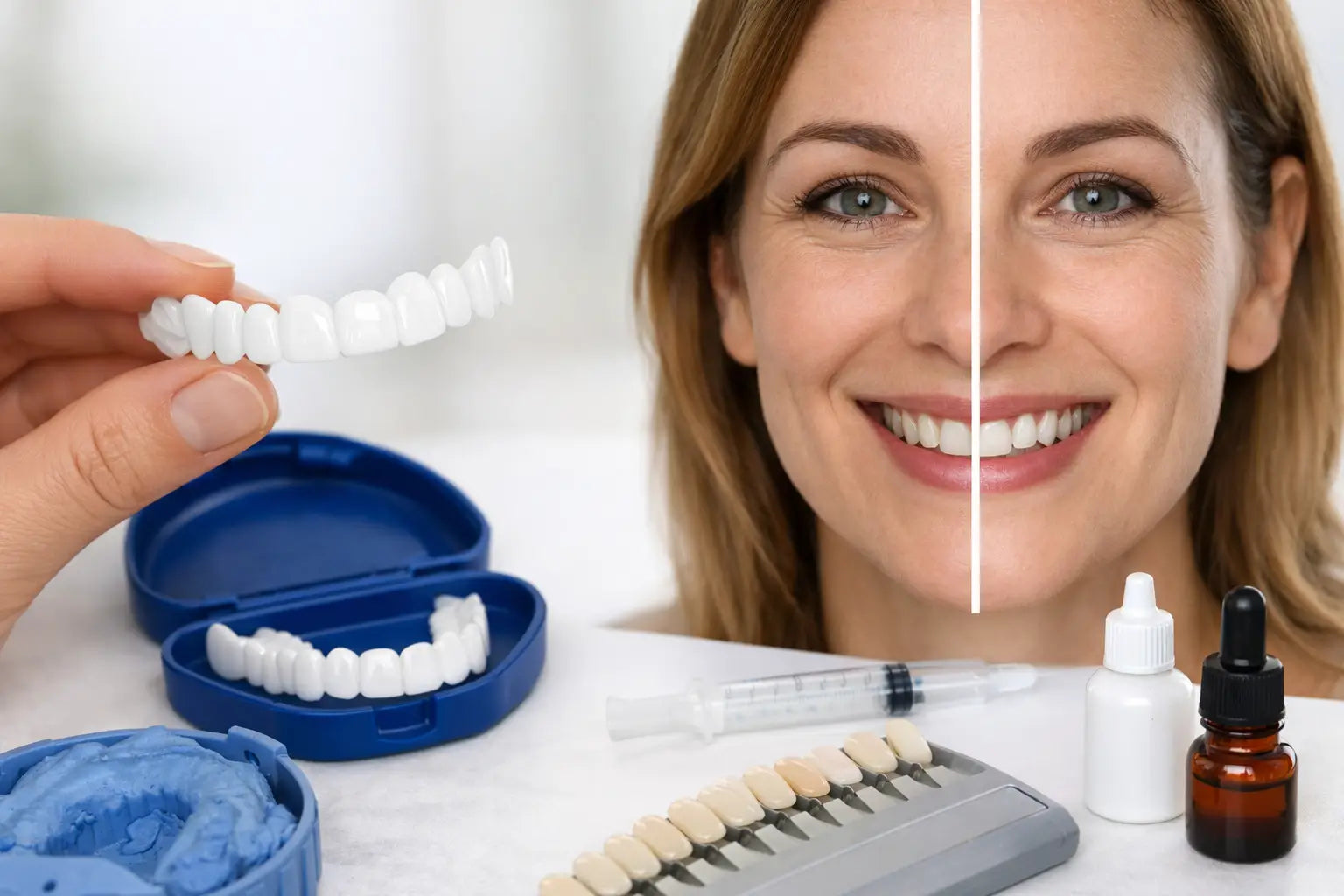
A smile can feel like the first thing people notice in a photo, a meeting, or a close conversation. If you are unhappy with chips, stains, gaps, uneven edges, or missing teeth, you may be researching the best alternatives to porcelain veneers because you want a visible change without committing to drilling, needles, high costs, or permanent changes to your natural teeth.
Porcelain veneers can create a dramatic cosmetic result, but they are not the right fit for every budget, timeline, or comfort level. They usually require professional appointments and enamel reduction, and once teeth are prepared, that decision cannot simply be reversed. The better question is not which option is universally best. It is which option matches the concerns you want to improve, the level of permanence you are comfortable with, and the result you expect.
Best alternatives to porcelain veneers
1. Custom removable veneers
Custom removable veneers, often called snap-on veneers, are designed to fit over your existing teeth and create a more even, polished-looking smile. They can be an appealing option for adults who want to cover several visible concerns at once, including discoloration, chips, gaps, worn teeth, uneven shapes, and some missing teeth, without altering the teeth underneath.
The major advantage is flexibility. A properly custom-made appliance is removable, so it does not involve drilling or a permanent change to your enamel. At Removable Veneers USA, each appliance is made to order in a U.S. dental lab from impressions, with licensed dental professional involvement and personal design support throughout the process. Results depend on accurate impressions, the model selected, and the starting condition of your teeth, but the goal is a natural-looking cosmetic improvement that fits your life and budget.
Removable veneers are a cosmetic appliance, not a replacement for dental care or a solution for painful or actively damaged teeth. If you have pain, loose teeth, or an issue that needs clinical treatment, address that first. For many people with healthy teeth who want a non-invasive appearance upgrade, however, custom removable veneers can be one of the most practical alternatives.
2. Composite bonding
Composite bonding uses tooth-colored resin to change the shape, length, or appearance of individual teeth. A dental professional applies and sculpts the material directly onto the tooth, making bonding useful for a small chip, a narrow gap, or one tooth that looks shorter or more uneven than the rest.
Compared with porcelain veneers, bonding can require less tooth preparation and may cost less per tooth. The trade-off is durability and stain resistance. Resin can chip, wear, or discolor over time, particularly if you are treating multiple front teeth. It also requires in-office visits and is usually best when the concern is limited rather than a full-smile transformation.
3. Professional teeth whitening
When the main concern is tooth color rather than shape, whitening may be all you need. Professional whitening can brighten natural enamel without changing the structure of the tooth, making it a more conservative choice than veneers for certain types of staining.
Whitening will not close gaps, replace missing teeth, straighten uneven edges, or cover chips. It may also produce uneven color if you already have visible dental restorations. Still, if your teeth are generally uniform and you simply want a brighter appearance, it can be a straightforward first step before considering a more involved cosmetic option.
4. Dental crowns
A crown covers the entire visible portion of a tooth. It is generally considered when a tooth needs more coverage or structural support than a veneer or bonding can provide. Crowns can also improve the appearance of a badly worn, misshapen, or severely discolored tooth.
This option is more extensive than porcelain veneers, not less. A crown typically requires significant reshaping of the natural tooth and professional treatment over one or more appointments. It can make sense for a tooth with a specific structural need, but it is not usually the first choice for someone seeking a reversible cosmetic improvement across an otherwise healthy smile.
5. Enamel contouring
Enamel contouring, sometimes called tooth reshaping, is a minor procedure that smooths or subtly adjusts the edge of a tooth. It may help when one front tooth has a small point, a slightly irregular edge, or a shape that disrupts an otherwise balanced smile.
The benefit is that it can be relatively quick and conservative when only a small adjustment is needed. The limitation is equally clear: it removes enamel. Because enamel does not grow back, contouring is permanent and cannot create the broad color, coverage, or symmetry change that veneers and removable veneers can provide.
6. Dental implants
For a missing tooth, an implant can be a long-term replacement option. It is placed through a surgical process and is typically topped with a crown that is designed to resemble a natural tooth. An implant can be a strong choice when restoring function is the primary goal.
It is also one of the biggest commitments on this list. The timeline, cost, surgery, and healing requirements can make implants unsuitable for someone who wants a faster, non-invasive cosmetic option. If your concern is the appearance of a missing tooth or teeth in social settings and you do not want a surgical procedure, a custom removable veneer may offer a different path to a more complete-looking smile.
7. Bridges or removable partial dentures
A bridge can fill a space created by a missing tooth, while a removable partial denture can replace one or more missing teeth. These options may be considered when tooth replacement is needed, but they solve a different problem from a cosmetic veneer. Their design, cost, comfort, and level of tooth alteration vary widely.
A bridge may require work on neighboring teeth. A partial denture is removable but is generally designed for tooth replacement rather than a broad cosmetic smile makeover. If your goals include improving the visible look of multiple teeth while also disguising gaps, compare the look and feel you want rather than assuming every removable option will deliver the same cosmetic result.
How to choose the right alternative
Start by being specific about what you see when you smile. Is color the issue? Is it one chipped tooth? Are several teeth worn, gapped, uneven, or missing? A single-tooth concern may point toward bonding, whitening, or a crown. A broader concern involving many visible teeth may make a full-smile cosmetic appliance more appealing.
Then consider the commitment you are willing to make. Porcelain veneers, crowns, contouring, implants, and many bridge designs involve permanent changes or procedures. Custom removable veneers offer a different experience: you take impressions at home, approve your fit process, and receive an appliance made specifically for your smile. You can remove it when needed, which matters to people who want confidence without permanently changing their natural teeth.
Price and timing deserve an honest place in the decision too. In-office cosmetic dentistry can involve multiple visits and a larger financial commitment, while at-home custom removable veneers are designed around convenience and a lower barrier to getting started. Lower cost should never mean settling for a generic, boil-and-bite product. A custom fit, quality materials, clear support, and a realistic review of your smile goals make a meaningful difference.
Set expectations before you decide
The most satisfying cosmetic choice is usually the one that solves the right problem, not the one with the biggest promise. Porcelain veneers can be an excellent option for people ready for permanent dental work. Bonding can be useful for small corrections. Whitening can help when color is the only concern. And custom removable veneers can be a strong fit for adults who want coverage, convenience, and a visible smile transformation without drilling or office-based cosmetic procedures.
Before ordering or scheduling any cosmetic option, look closely at real examples that resemble your starting smile. Ask how the solution is made, whether it is customized, what support is available if you need guidance, and what is realistically possible for gaps, missing teeth, tooth shape, and shade. A company that explains the limits as clearly as the benefits is giving you information you can trust.
Your smile does not have to wait for a perfect time or a permanent procedure. Choose the option that helps you feel more comfortable showing up in photos, conversations, and everyday moments while still respecting your comfort level, budget, and natural teeth.