
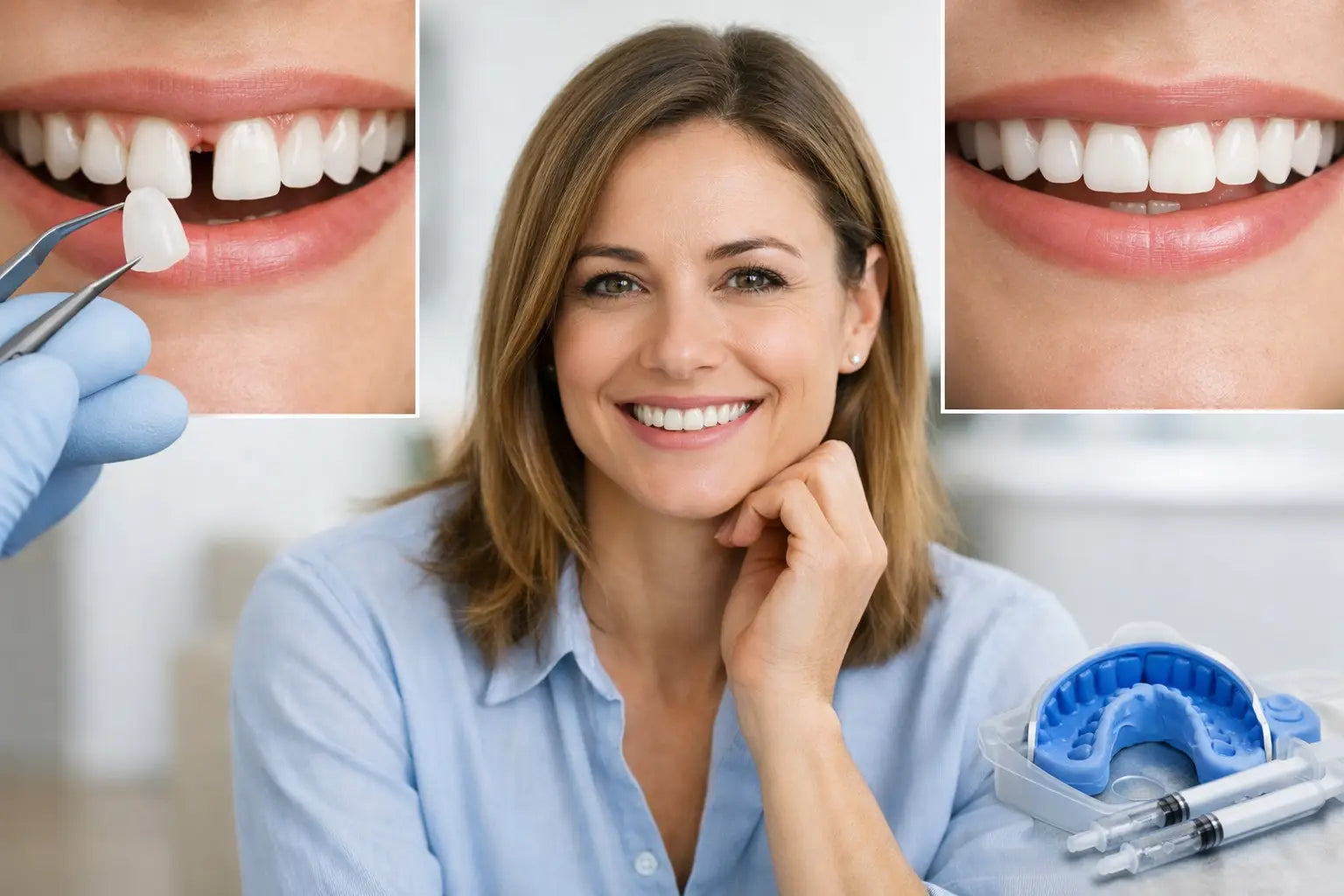
A gap between teeth can feel much bigger than it looks. It may catch your eye in photos, make you cover your mouth when you laugh, or leave you wishing your smile looked more balanced in conversations. The top ways to hide gaps range from in-office cosmetic work to custom removable veneers, and the right choice depends on the size and location of the gap, your budget, and whether you want a temporary or lasting change.
The best option is not always the most expensive one. What matters is choosing an approach that gives you a believable, comfortable-looking result without committing you to more treatment than you want.
Top Ways to Hide Gaps in Your Smile
1. Custom removable veneers
Custom removable veneers are designed to sit over your existing teeth and create the appearance of a fuller, more even smile. By adding visual width and improving tooth shape, they can conceal spaces between visible teeth without drilling, needles, or permanent changes to your natural teeth.
This can be a practical choice for adults who want a cosmetic change without a long series of office visits. A well-made appliance is based on your impressions, so the fit, tooth proportions, and overall smile design are created for you rather than pulled from a one-size-fits-all mold.
The trade-off is that removable veneers are a cosmetic appliance, not a permanent dental restoration. They should be taken out as directed, cared for properly, and worn with realistic expectations. They are especially appealing when the goal is to look more confident for everyday life, photos, work events, dates, or a special occasion without altering your teeth.
At Removable Veneers USA, every appliance is made to order through a U.S. dental lab process, with licensed dental professional involvement and a personal design consultant available to help throughout the ordering process. That custom attention matters when gaps are part of a broader concern, such as worn, uneven, chipped, or naturally small-looking teeth.
2. Cosmetic bonding
Cosmetic bonding uses tooth-colored resin to build out the sides of teeth next to a gap. A dental professional shapes the material so the teeth appear wider and the space looks smaller or disappears altogether. It can work well for a small gap when you want a fixed result that blends with your natural smile.
Bonding is generally less extensive than other permanent cosmetic options, but it still involves a professional appointment and ongoing maintenance. The material can discolor, chip, or need repair over time, particularly if it is placed on areas that receive frequent pressure. Cost can also add up when multiple teeth need to be reshaped for a balanced result.
For some people, that investment makes sense. For others, a removable cosmetic solution offers a more comfortable starting point because it does not permanently change the tooth surface.
3. Traditional porcelain veneers
Porcelain veneers are thin shells bonded to the fronts of teeth. They can hide gaps while also changing color, length, and shape. When designed carefully, they can create a highly polished, uniform appearance.
However, traditional veneers are a major decision. They often require tooth preparation, are not reversible once placed, and usually involve a higher cost than other ways to hide gaps. The process may also require several in-office appointments before the final veneers are fitted.
They may be appropriate for someone seeking a long-term cosmetic restoration and prepared for the commitment. But if permanence, drilling, or the price point gives you pause, it is reasonable to explore custom removable veneers first.
4. Dental crowns for teeth that need more coverage
A crown covers the entire visible portion of a tooth, which can help close a space when a tooth also needs substantial reshaping or coverage. Because crowns change the structure and appearance of the tooth, they are not usually chosen solely to hide a small cosmetic gap.
This route is more involved than bonding or removable veneers and requires a dental professional to determine whether it suits your situation. It can be useful when a gap is only one part of a larger visible concern, but it is not the simple answer for everyone who wants a more even-looking smile.
5. A smile design that balances more than the gap
Sometimes, closing the gap alone is not what makes a smile look natural. If the neighboring teeth are narrow, short, worn, pointed, or uneven, making only one or two teeth wider can create a result that looks out of proportion.
That is why a complete smile design can be more flattering than a narrow focus on the space itself. A custom removable veneer can visually balance the teeth that show when you smile, helping the gap blend into a more consistent overall appearance. The goal is not to create an artificial-perfect look. It is to create proportions that feel like they belong to your face and your smile.
How to Choose the Best Gap-Covering Option
Start by deciding how permanent you want the change to be. Bonding, porcelain veneers, and crowns are fixed treatments, while removable veneers give you a non-permanent cosmetic option. If you are hesitant about altering healthy tooth structure or want to avoid an office-based cosmetic procedure, that distinction can make the decision clearer.
Next, consider the type of result you want. A small space between otherwise even teeth may respond well to bonding. If you are concerned about several visible issues at once, such as gaps plus staining or uneven edges, a broader cosmetic approach may create a more cohesive result.
Budget and timing also matter. Permanent cosmetic work can involve multiple appointments and a larger upfront investment. Custom removable veneers are ordered from home with an impression kit, then manufactured specifically for your smile after your impressions are approved. Qualified buyers may also have monthly financing options, which can make a smile transformation easier to plan for.
Finally, be honest about how you will use your new smile. If you want to feel more at ease in photos, social settings, and professional interactions, a removable option may offer the flexibility you want. If you are looking for a fixed restoration and accept the permanence involved, an in-office solution may be a better fit.
What Makes a Gap-Hiding Result Look Natural?
Natural-looking results come down to proportion, shade, and fit. Teeth should not look overly wide just because a gap has been covered. The shape should complement the surrounding teeth, and the shade should suit the look you want, whether that means a subtle refresh or a brighter, more uniform smile.
Fit is equally important with removable veneers. An appliance that is custom-made from accurate impressions is far more likely to look intentional and feel secure than a generic snap-on product. That is why the impression stage deserves care. Follow the instructions closely, ask for support if something does not look right, and do not rush through a step that determines your final fit.
It also helps to choose a company that is transparent about the process, materials, and support available after you order. A good cosmetic result is not just about receiving an appliance. It is about having guidance from the first impression through the finished smile.
A Confident Smile Does Not Have to Be Permanent
A visible gap does not need to dictate how freely you smile. Whether you choose bonding, porcelain veneers, or a custom removable option, there is value in selecting a solution that fits your comfort level as much as your appearance goals. The most satisfying change is often the one that lets you look in the mirror, smile naturally, and feel more like yourself.